

Адрес:149, Aimin Road, Chashan Town, Dongguan, Guangdong, China
Телефон:1388xx888xx
Мобильные телефоны:1388xx888xx
Почтовый ящик:1388xx888xx@gmail.com
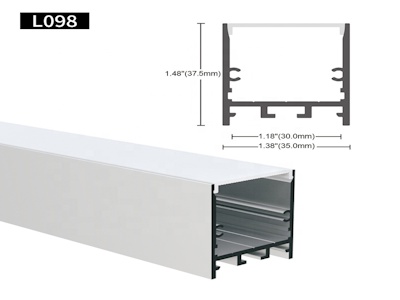
В современном мире строительства и промышленности выбор материалов играет ключевую роль в обеспечении долговечности, эффективности и экономической целесообразности проектов. Среди множества доступных вариантов алюминиевые профили выделяются благодаря своим уникальным свойствам, которые превосходят характеристики многих традиционных материалов, таких как сталь, поливинилхлорид (ПВХ) и дерево. В этой статье мы подробно рассмотрим преимущества алюминиевых профилей, опираясь на научные данные, практический опыт и сравнительный анализ, чтобы помочь вам сделать informed decision при выборе материалов для ваших нужд.
Алюминиевые профили представляют собой изделия, изготовленные из алюминия или его сплавов методом экструзии, который позволяет создавать сложные формы и сечения с высокой точностью. Алюминий как материал обладает низкой плотностью (примерно 2,7 г/см³), что делает его легким, но при этом прочным благодаря возможности легирования с другими элементами, такими как магний, кремний или медь. Это сочетание легкости и прочности является одним из ключевых преимуществ, которое мы рассмотрим далее.
Одним из наиболее значимых преимуществ алюминиевых профилей является их исключительное соотношение прочности к весу. По сравнению со сталью, которая имеет плотность около 7,85 г/см³, алюминиевые сплавы могут достигать прочности, сопоставимой с некоторыми марками стали, но при весе примерно в три раза меньшем. Это делает алюминиевые профили идеальными для применений, где снижение веса критически важно, таких как аэрокосмическая промышленность, автомобилестроение и строительство высотных зданий. Например, в авиации использование алюминиевых сплавов позволяет уменьшить общий вес самолета, что приводит к экономии топлива и снижению выбросов CO2.
Более того, алюминиевые профили демонстрируют высокую усталостную прочность, что означает их способность выдерживать повторяющиеся нагрузки без разрушения. Это особенно важно в динамических средах, таких как мосты или промышленное оборудование. В сравнении с материалами like ПВХ, которые могут становиться хрупкими при низких температурах, алюминий сохраняет свои механические свойства в широком диапазоне температур, от криогенных до elevated temperatures.
Алюминий естественным образом образует тонкий слой оксида на своей поверхности, который защищает его от коррозии. Этот пассивный слой является самовосстанавливающимся при воздействии кислорода, что обеспечивает долговечность даже в агрессивных средах, таких как морская вода или промышленные атмосферы. В отличие от стали, которая требует регулярной покраски или гальванизации для предотвращения ржавчины, алюминиевые профили often не нуждаются в дополнительной защите, что снижает затраты на обслуживание.
Для сравнения, ПВХ профили могут подвергаться деградации под воздействием УФ-излучения, leading to выцветанию и потере механической прочности over time. Дерево, хотя и обладает естественной эстетикой, требует постоянной обработки антисептиками и лаками для защиты от влаги, грибков и насекомых, что увеличивает общую стоимость владения. Алюминий, будучи неорганическим материалом, immune to biological attacks, making it a more reliable choice for long-term applications.
В эпоху growing environmental awareness, алюминиевые профили offer significant advantages in terms of sustainability. Алюминий is highly recyclable—up to 100% of the material can be reused without loss of quality, and the recycling process requires only about 5% of the energy needed for primary production. This contrasts with materials like PVC, which can release toxic chemicals during production and disposal, or wood, which contributes to deforestation if not sourced sustainably.
Furthermore, the lightweight nature of aluminum profiles reduces transportation emissions, as lighter structures require less energy to move. In building construction, aluminum's reflectivity can contribute to energy efficiency by reducing heat absorption, thus lowering cooling costs in warm climates. Life cycle assessments consistently show that aluminum products have a lower environmental impact over their lifetime compared to many alternatives, making them a preferred choice for green building certifications such as LEED or BREEAM.
Процесс экструции позволяет создавать алюминиевые профили практически любой формы и размера, offering unparalleled design flexibility. This enables architects and engineers to realize complex geometries and customized solutions that are difficult to achieve with other materials. For instance, in modern architecture, aluminum profiles are used for curtain walls, windows, and facades, providing sleek, minimalist aesthetics while ensuring structural integrity.
In contrast, steel profiles are often limited to standard shapes due to the constraints of rolling processes, and PVC profiles may not offer the same level of precision or strength for large-span applications. Wood, while versatile in craftsmanship, is susceptible to warping and shrinking with changes in humidity, limiting its use in precision engineering. Aluminum's malleability and ability to be anodized or painted in various colors further enhance its appeal for aesthetic applications.
Алюминий обладает высокой теплопроводностью, which can be both an advantage and a disadvantage depending on the application. In building envelopes, thermal breaks are often incorporated into aluminum profiles to reduce heat transfer, improving energy efficiency. Advances in technology, such as thermal insulation systems, have made aluminum windows and doors highly efficient, competing with or even surpassing PVC alternatives in terms of U-values.
Compared to wood, which has natural insulating properties but requires maintenance, aluminum profiles with thermal breaks provide a durable and low-maintenance solution. Steel, with its even higher thermal conductivity, often necessitates additional insulation layers, adding to complexity and cost. Thus, for applications where energy efficiency is paramount, properly designed aluminum systems can offer optimal performance.
Хотя initial cost of aluminum profiles may be higher than some materials like PVC or wood, their long-term economic benefits are substantial. The durability and low maintenance requirements reduce lifecycle costs, as there is no need for frequent repainting or replacement due to corrosion or decay. In industrial settings, the lightweight nature of aluminum can lead to savings in transportation and installation, as well as reduced structural support needs.
Additionally, the recyclability of aluminum means that end-of-life products can be sold as scrap, providing a financial return. This circular economy aspect is less pronounced with materials like PVC, which often end up in landfills, or wood, which may degrade and lose value. Over a project's lifetime, the total cost of ownership for aluminum profiles often proves to be lower, making them a wise investment.
Алюминиевые профили находят применение в numerous industries due to their versatile properties. In construction, they are used for structural frameworks, windows, doors, and roofing systems. In transportation, they are essential for vehicle frames, rail cars, and shipbuilding, where weight reduction is critical for fuel efficiency. The electronics industry utilizes aluminum profiles for heat sinks and enclosures, leveraging their thermal conductivity.
Comparatively, steel is often preferred for high-strength applications like bridges but comes with weight penalties. PVC is common in window frames but lacks the strength for load-bearing roles. Wood is used in residential construction but is less suited for industrial or harsh environments. Aluminum's adaptability across sectors underscores its superiority as a material choice.
To fully appreciate the advantages of aluminum profiles, let's delve into a detailed comparison with steel, PVC, and wood.
This analysis highlights that aluminum profiles provide a balanced combination of properties that often make them the best overall choice.
В заключение, алюминиевые профили демонстрируют numerous advantages over other materials, including exceptional strength-to-weight ratio, corrosion resistance, sustainability, design versatility, and economic benefits. While each material has its place depending on specific requirements, aluminum's comprehensive profile makes it a superior option for a wide range of applications in construction, industry, and beyond. By choosing aluminum profiles, stakeholders can achieve projects that are not only efficient and durable but also environmentally responsible and cost-effective in the long run.
As technology advances, we can expect further innovations in aluminum alloys and processing techniques, enhancing these advantages even more. Whether for a skyscraper, a vehicle, or a simple window frame, aluminum profiles continue to prove their worth as a material of the future.
 1388xx888xx