

Адрес:149, Aimin Road, Chashan Town, Dongguan, Guangdong, China
Телефон:1388xx888xx
Мобильные телефоны:1388xx888xx
Почтовый ящик:1388xx888xx@gmail.com
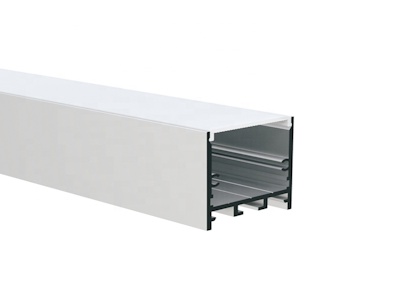
Алюминиевый профиль — это не просто строительный материал, а настоящий прорыв в инженерной мысли, который продолжает удивлять специалистов по всему миру. Его теплопроводность, часто недооцениваемая, становится ключевым фактором в современных проектах, от небоскребов до жилых домов. В этой статье мы глубоко погрузимся в мир алюминиевых профилей, исследуя, как их свойства теплопроводности не только шокируют инженеров, но и открывают новые горизонты для устойчивого развития и инноваций.
Теплопроводность — это способность материала передавать тепло через свою структуру. Измеряется в ваттах на метр-кельвин (Вт/(м·К)), этот параметр определяет, насколько эффективно материал может проводить или изолировать тепло. В строительстве высокий уровень теплопроводности может быть как преимуществом, так и недостатком, в зависимости от контекста применения. Для алюминиевых профилей, с их значением теплопроводности около 237 Вт/(м·К), это свойство делает их исключительными проводниками тепла, что шокирует инженеров, привыкших к более традиционным материалам, таким как сталь или дерево.
Инженеры, работающие над проектами энергоэффективных зданий, часто сталкиваются с дилеммой: как использовать материалы, которые одновременно прочны и способны управлять тепловыми потоками. Алюминиевые профили предлагают уникальное решение благодаря своей высокой теплопроводности. Это позволяет быстро распределять тепло, предотвращая локальные перегревы и способствуя равномерному температурному режиму в конструкциях. Например, в системах фасадов это свойство помогает снизить энергопотребление на отопление и охлаждение, что ведет к значительной экономии ресурсов и сокращению выбросов углекислого газа.
Но почему именно алюминиевый профиль шокирует? Дело в том, что многие инженеры изначально воспринимают высокую теплопроводность как проблему, особенно в холодном климате, где это может привести к теплопотерям. Однако, при правильном проектировании, это же свойство превращается в преимущество. Инновационные инженерные решения, такие как термические разрывы в профилях, позволяют минимизировать негативные эффекты и максимизировать выгоды. Это заставляет пересматривать устоявшиеся нормы и вдохновляет на создание более эффективных и устойчивых зданий.
Алюминий как материал известен с древних времен, но его широкое применение в строительстве началось лишь в XX веке, благодаря advancements в металлургии. Первые алюминиевые профили использовались в авиации и автомобилестроении, где легкость и прочность были критически важны. Со временем, инженеры осознали потенциал алюминия в строительстве, особенно due to its corrosion resistance and malleability.
В 1950-х годах, с ростом интереса к энергоэффективности, теплопроводность алюминия стала предметом интенсивных исследований. Изначально, многие опасались, что высокая теплопроводность сделает алюминиевые профили непригодными для строительства в умеренных и холодных климатах. Однако, pioneering engineers began to experiment with composite materials and insulating techniques, leading to the development of thermally broken profiles. These innovations allowed aluminum to be used in windows, doors, and curtain walls without compromising thermal performance.
Сегодня, алюминиевые профили являются неотъемлемой частью modern architecture. From the Burj Khalifa in Dubai to eco-friendly homes in Scandinavia, их применение демонстрирует, как теплопроводность can be harnessed for good. The shock factor for engineers comes from realizing that what was once a limitation is now a driver of innovation. For instance, in passive house design, aluminum profiles with high thermal conductivity are used to facilitate heat exchange systems, reducing the need for artificial heating and cooling.
Развитие технологии продолжается: новые сплавы и покрытия enhance the thermal properties of aluminum profiles, making them even more versatile. Engineers are now exploring applications in renewable energy, such as solar panel frames, where efficient heat dissipation is crucial for maximizing energy output. This historical journey shows that the shock is not just about the material itself, but about the creative ways engineers have learned to leverage its properties.
Чтобы fully appreciate why aluminum's thermal conductivity shocks engineers, it's essential to delve into the science behind it. Thermal conductivity is governed by the movement of free electrons in a material. In metals like aluminum, the atomic structure allows electrons to move freely, facilitating rapid heat transfer. Aluminum has a face-centered cubic crystal lattice, which contributes to its high conductivity value of approximately 237 W/(m·K). This is significantly higher than other common construction materials: steel has about 50 W/(m·K), wood ranges from 0.04 to 0.4 W/(m·K), and glass around 1 W/(m·K).
Эта разница в значениях means that aluminum can transfer heat much faster than its counterparts. For engineers, this presents both challenges and opportunities. In applications where heat needs to be dissipated quickly, such as in heat sinks for electronics or in building exteriors exposed to sun, aluminum's conductivity is a boon. However, in insulating contexts, it can lead to thermal bridging, where heat escapes through the material, reducing energy efficiency.
Инженеры используют advanced modeling software, such as finite element analysis (FEA), to simulate thermal behavior in aluminum profiles. These simulations help predict how heat will flow through a structure and identify potential issues. For example, in a window frame, without proper insulation, aluminum can act as a conduit for heat loss. But by incorporating thermal breaks—non-conductive materials inserted into the profile—engineers can drastically reduce this effect. This scientific approach transforms the initial shock into a calculated advantage.
Moreover, research into nanomaterials and surface treatments is pushing the boundaries. Coatings that reflect infrared radiation or enhance emissivity can modify the effective thermal conductivity of aluminum profiles. This allows for tailoring the material's behavior to specific environmental conditions, further amazing engineers with its adaptability. The science not only explains the shock but also provides the tools to harness it for innovative applications.
Алюминиевые профили находят широкое применение в современном строительстве, и их теплопроводность играет pivotal role. One of the most common uses is in window and door systems. Here, the high thermal conductivity of aluminum can be a double-edged sword. On one hand, it allows for efficient dissipation of heat from solar gain, preventing overheating in summer. On the other hand, it can lead to heat loss in winter if not properly addressed.
To mitigate this, engineers have developed thermally broken aluminum profiles. These profiles feature a plastic or rubber insulator between the inner and outer parts of the frame, interrupting the thermal bridge. This innovation has revolutionized the industry, enabling aluminum to be used in energy-efficient buildings without sacrificing durability or aesthetics. For instance, in passive house standards, such profiles help achieve ultra-low energy consumption by minimizing thermal transmittance.
Another exciting application is in curtain wall systems for high-rise buildings. Aluminum profiles form the skeleton of these facades, and their thermal conductivity helps manage heat distribution across large surfaces. In hot climates, this can reduce the load on air conditioning systems by facilitating natural ventilation and heat dissipation. Engineers are shocked by how these systems can integrate with smart technologies, such as sensors that monitor temperature and adjust shading automatically, leveraging aluminum's conductive properties for real-time energy management.
Beyond traditional construction, aluminum profiles are used in green building initiatives. For example, in solar thermal systems, aluminum frames help dissipate heat from collectors, improving efficiency. In modular construction, the lightweight and conductive nature of aluminum allows for rapid assembly and better thermal performance. Case studies from projects like The Edge in Amsterdam, which uses aluminum extensively for its sustainable design, demonstrate how engineers are continuously surprised by the material's versatility and the positive impact on carbon footprint reduction.
When engineers compare aluminum profiles to other materials, the differences in thermal conductivity become starkly apparent. Take steel, for example: while strong and durable, steel has a thermal conductivity of around 50 W/(m·K), which is less than a quarter of aluminum's. This means steel is better at insulating but worse at conducting heat. In applications where heat dissipation is needed, such as in industrial equipment, aluminum outperforms steel, leading to shock when engineers switch from traditional materials.
Wood, with its very low thermal conductivity (0.04-0.4 W/(m·K)), is excellent for insulation but lacks the strength and durability of metals. Aluminum profiles offer a compromise: they provide structural integrity with manageable thermal properties through design innovations. PVC profiles, common in windows, have even lower conductivity (about 0.2 W/(m·K)) but are less environmentally friendly and durable over time. Engineers are often surprised by how aluminum, with proper treatment, can match or exceed the thermal performance of these materials while offering superior longevity.
Composite materials, such as aluminum-polymer composites, combine the best of both worlds. They use aluminum for strength and conductivity, paired with polymers for insulation. This hybridization shocks engineers by demonstrating that material science can create solutions tailored to specific needs. For instance, in automotive applications, aluminum composites help manage engine heat while reducing weight, a concept that is now being adopted in building envelopes for enhanced energy efficiency.
The comparison extends to cost and sustainability. Aluminum is highly recyclable, with up to 95% recyclability, reducing its environmental impact compared to materials like PVC. Although initial production energy is high, the long-term benefits in energy savings from improved thermal management often outweigh this, a fact that continues to astonish engineers focused on life-cycle assessment. This holistic view reinforces why aluminum profiles are becoming the material of choice for forward-thinking projects.
Будущее алюминиевых профилей выглядит bright, with innovations that further leverage their thermal conductivity. One emerging trend is the integration of phase change materials (PCMs) into aluminum profiles. PCMs can store and release thermal energy, helping to regulate indoor temperatures passively. By combining aluminum's conductivity with PCMs, engineers can create building components that automatically adjust to environmental changes, reducing reliance on HVAC systems and shocking the industry with their efficiency.
Another area of innovation is in smart buildings. Aluminum profiles embedded with IoT sensors can monitor thermal flows in real-time, allowing for dynamic adjustments. For example, in a smart window system, aluminum frames with conductive properties can help dissipate excess heat while sensors trigger blinds or ventilation. This level of integration was once science fiction but is now reality, amazing engineers with its practicality and potential for energy savings.
Advancements in manufacturing, such as 3D printing of aluminum profiles, enable custom designs that optimize thermal performance. Engineers can create profiles with intricate geometries that enhance heat distribution or incorporate air gaps for improved insulation. This customization shocks traditionalists who are used to standardized solutions, opening doors to highly efficient, bespoke building systems.
Looking ahead, research into graphene-enhanced aluminum composites promises even higher thermal conductivity and strength. These materials could revolutionize industries beyond construction, from aerospace to electronics. Engineers are on the cusp of discoveries that will make current applications seem primitive. The ongoing shock stems from the realization that aluminum's potential is far from exhausted; it's a material that keeps giving, driving sustainable innovation and redefining what's possible in engineering.
В заключение, теплопроводность алюминиевых профилей продолжает шокировать инженеров не потому, что это неизвестное свойство, а потому, что его implications are continually being reimagined. What started as a potential drawback has become a cornerstone of modern sustainable design. Engineers are shocked by the material's adaptability, from basic construction to cutting-edge smart technologies.
Это шок drives progress, encouraging a shift from reactive problem-solving to proactive innovation. By embracing aluminum's thermal properties, the engineering community can create buildings that are not only efficient but also resilient and environmentally friendly. The lessons learned from aluminum profiles apply broadly, teaching us to look beyond superficial limitations and harness inherent characteristics for greater good.
As we move into an era of climate change and resource scarcity, the role of materials like aluminum will only grow. Engineers who once feared high thermal conductivity now celebrate it as a tool for change. This journey from shock to inspiration exemplifies the spirit of engineering: constantly learning, adapting, and improving. So, the next time you see an aluminum profile, remember—it's not just metal; it's a symbol of how surprise can lead to sustainability and innovation.
 1388xx888xx