

Адрес:149, Aimin Road, Chashan Town, Dongguan, Guangdong, China
Телефон:1388xx888xx
Мобильные телефоны:1388xx888xx
Почтовый ящик:1388xx888xx@gmail.com
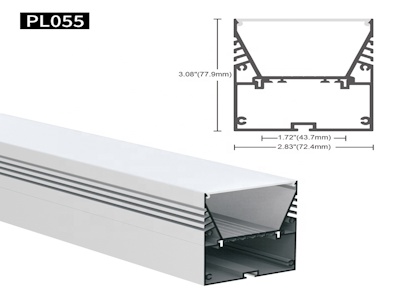
Алюминиевые профили играют ключевую роль в современном строительстве, машиностроении и других отраслях, где прочность и надежность являются критическими факторами. Выбор подходящего профиля на основе его прочностных характеристик не только определяет долговечность конструкций, но и влияет на безопасность, экономическую эффективность и экологическую устойчивость проектов. В данной статье мы подробно рассмотрим стратегические подходы к выбору алюминиевых профилей, акцентируя внимание на их прочности как фундаментальном элементе надежности. Мы обсудим ключевые факторы, включая механические свойства, стандарты качества, методы тестирования и практические примеры, чтобы предоставить читателю всеобъемлющее руководство для принятия обоснованных решений.
Алюминий, как материал, обладает уникальным сочетанием легкости, коррозионной стойкости и высокой прочности, что делает его идеальным для широкого спектра применений. Алюминиевые профили, изготовленные путем экструзии, позволяют создавать сложные сечения, оптимизированные для конкретных нагрузок и условий эксплуатации. Их использование распространяется от строительных фасадов и оконных рам до автомобильных компонентов и аэрокосмических конструкций. Однако, несмотря на универсальность, неправильный выбор профиля по прочности может привести к катастрофическим последствиям, таким как структурные отказы, повышенные затраты на обслуживание или даже угрозы безопасности. Поэтому понимание прочностных характеристик алюминиевых профилей является не просто технической необходимостью, но и стратегическим императивом для инженеров, архитекторов и проектировщиков.
Прочность алюминиевого профиля определяется множеством факторов, включая состав сплава, процесс обработки, геометрию сечения и условия эксплуатации. Например, сплавы серии 6xxx (такие как 6061 или 6063) широко используются в строительстве благодаря их хорошей прочности и свариваемости, в то время как сплавы серии 7xxx предлагают высочайшую прочность для критических применений, таких как авиация. Выбор должен основываться на тщательном анализе ожидаемых нагрузок, включая статические, динамические и циклические напряжения, а также внешние воздействия, такие как температура, влажность и химические среды.
В этой статье мы углубимся в детали, начиная с основ прочности материалов и заканчивая продвинутыми методами оптимизации. Мы рассмотрим, как стандарты, такие как EN 755 или ASTM B221, регулируют производство и тестирование профилей, и как современные технологии, включая компьютерное моделирование (например, метод конечных элементов), помогают прогнозировать поведение профилей под нагрузкой. Кроме того, мы представим case studies из реальных проектов, иллюстрирующие успешные и неудачные выборы, чтобы извлечь практические уроки.
К концу чтения вы будете equipped с знаниями, необходимыми для того, чтобы делать informed decisions при выборе алюминиевых профилей, обеспечивая тем самым надежность и долговечность ваших конструкций. Давайте начнем это путешествие в мир прочности и надежности алюминиевых профилей.
Прочность материала refers to its ability to withstand applied forces without failure. Для алюминиевых профилей ключевыми показателями прочности являются предел текучести (yield strength), предел прочности при растяжении (tensile strength), и модуль упругости (modulus of elasticity). Предел текучести указывает на напряжение, при котором материал начинает пластически деформироваться, в то время как предел прочности при растяжении представляет максимальное напряжение before fracture. Модуль упругости характеризует жесткость материала, то есть how much it will deform under load.
Алюминиевые сплавы могут быть усилены through various methods, such as heat treatment (e.g., aging or solution heat treatment), cold working, or alloying with elements like magnesium, silicon, or zinc. Например, сплав 6061-T6 имеет предел текучести около 240 MPa и предел прочности при растяжении 260 MPa, что делает его suitable for structural applications. In contrast, сплав 7075-T6, used in aerospace, can have a yield strength of over 500 MPa, but it is more prone to corrosion and requires careful handling.
При выборе профиля важно учитывать not only the nominal strength values but also factors like anisotropy (variation in strength with direction), fatigue strength (resistance to cyclic loading), and creep resistance (deformation under sustained load at high temperatures). For instance, in applications involving vibration or repeated loading, such as in bridges or machinery, fatigue strength becomes critical, and profiles must be designed to minimize stress concentrations.
Геометрия профиля также играет vital role in its overall strength. Complex extrusions can include ribs, grooves, or hollow sections that enhance stiffness and distribute loads more efficiently. However, sharp corners or thin walls can act as stress risers, leading to premature failure. Therefore, computational tools like finite element analysis (FEA) are often employed to simulate load conditions and optimize the profile design before manufacturing.
In summary, understanding these basic concepts is essential for selecting the right aluminum profile. It allows engineers to match the material properties to the specific demands of the application, ensuring that the profile will perform reliably over its intended lifespan. In the next section, we will explore the factors influencing the strength of aluminum profiles in more detail.
Множество факторов определяют最终ную прочность алюминиевого профиля, и их учет является crucial для обеспечения надежности. Во-первых, состав сплава: алюминиевые сплавы классифицируются по сериям, каждая с уникальными свойствами. Например, сплавы серии 1xxx (чистый алюминий) имеют низкую прочность но высокую коррозионную стойкость, в то время как серии 6xxx и 7xxx предлагают balanced or high strength, respectively. Добавки like copper or zinc can increase strength but may reduce ductility or corrosion resistance.
Во-вторых, термическая обработка significantly enhances strength. Processes such as T4 (solution heat treated and naturally aged) or T6 (solution heat treated and artificially aged) alter the microstructure to improve mechanical properties. For example, a 6061 alloy in T6 condition is much stronger than in the annealed (O) condition. It's important to specify the correct temper when ordering profiles to avoid underperformance.
Третий фактор - процесс экструзии: during extrusion, the aluminum billet is forced through a die to create the desired shape. Parameters like extrusion speed, temperature, and die design affect the final strength. Faster extrusion can lead to finer grain structures, which generally improve strength, but may also cause defects if not controlled properly. Die design must minimize dead zones and ensure uniform flow to prevent weaknesses in the profile.
Четвертый, геометрические aspects: the cross-sectional shape of the profile influences its moment of inertia and section modulus, which determine how it resists bending and torsion. Profiles with larger second moments of area are stiffer and stronger under flexural loads. Additionally, wall thickness must be sufficient to prevent buckling or local failure. Standards like EN 1999 provide guidelines for design based on geometric properties.
Пятый, внешние условия: эксплуатационная среда can degrade strength over time. Corrosion, especially in humid or saline environments, can reduce effective cross-section and lead to stress corrosion cracking. Protective coatings, such as anodizing or powder coating, are often applied to mitigate this. Temperature variations also affect strength; aluminum's strength decreases at elevated temperatures, so for high-temperature applications, special alloys or cooling measures may be necessary.
Шестой, качество manufacturing: imperfections like inclusions, porosity, or surface defects can act as initiation sites for cracks, reducing overall strength. Strict quality control during production, including non-destructive testing (e.g., ultrasonic testing), is essential to ensure consistency and reliability.
By considering these factors holistically, selectors can choose profiles that not only meet strength requirements but also excel in durability and performance. In the following sections, we will discuss how to evaluate and test these properties in practice.
To ensure that aluminum profiles meet the required strength criteria, various testing methods are employed throughout the manufacturing and selection process. Mechanical testing is paramount, with tensile tests being the most common. In a tensile test, a sample of the profile is subjected to increasing load until failure, measuring yield strength, tensile strength, and elongation. These tests are conducted according to standards like ASTM E8 or ISO 6892, providing quantitative data on material properties.
Hardness testing, such as Brinell or Vickers tests, offers a quick way to estimate strength, as hardness correlates with tensile strength for many aluminum alloys. However, it is not a substitute for tensile testing, as it doesn't capture ductility or other nuanced properties.
For applications involving cyclic loading, fatigue testing is crucial. This involves subjecting samples to repeated stress cycles to determine the fatigue limit or S-N curve (stress vs. number of cycles to failure). Profiles intended for dynamic environments, like in automotive or aerospace, must undergo rigorous fatigue testing to prevent unexpected failures.
Non-destructive testing (NDT) methods, including ultrasonic testing, eddy current testing, and radiographic testing, are used to detect internal flaws without damaging the profile. These techniques help identify defects that could compromise strength, ensuring that only high-quality products reach the market.
In addition to laboratory tests, computational methods play an increasing role. Finite element analysis (FEA) allows engineers to simulate how a profile will behave under various loads, identifying potential weak points and optimizing design before physical prototyping. This reduces development time and cost while improving reliability.
Field testing and monitoring are also important, especially for large-scale structures. Strain gauges and sensors can be installed on profiles in service to measure actual stresses and validate design assumptions. This real-world data feeds back into the selection process, enabling continuous improvement.
Overall, a combination of testing methods ensures that aluminum profiles are selected based on accurate, reliable data. By adhering to international standards and leveraging advanced technologies, stakeholders can confidently choose profiles that deliver the promised strength and reliability.
To illustrate the importance of strength-based selection, let's examine some real-world examples. In the construction industry, the use of aluminum profiles in curtain walls is common. A project in a seismic-prone area required profiles with high yield strength to withstand earthquake loads. By choosing 6061-T6 alloy instead of a weaker option, the designers ensured that the building remained intact during a major quake, demonstrating how proper selection enhances safety.
In the automotive sector, aluminum profiles are used in chassis and body frames to reduce weight and improve fuel efficiency. A case study involving an electric vehicle showed that selecting a high-strength 7xxx series alloy for critical components allowed for thinner profiles, saving weight without compromising crash safety. However, the alloy's lower corrosion resistance necessitated additional coatings, highlighting the trade-offs involved.
Another example comes from the aerospace industry, where aluminum profiles form part of aircraft fuselages. Here, fatigue strength is paramount due to constant pressurization cycles. A well-documented incident involved the improper selection of a profile with inadequate fatigue properties, leading to crack propagation and near-catastrophic failure. This underscores the need for rigorous testing and adherence to aerospace standards like AMS or MMPDS.
In consumer products, such as furniture or electronics enclosures, strength selection often balances cost and performance. A company producing lightweight shelving used 6063 alloy for its good strength-to-weight ratio and ease of extrusion. By optimizing the profile geometry through FEA, they achieved sufficient strength for typical loads while minimizing material usage, reducing costs and environmental impact.
These case studies emphasize that there is no one-size-fits-all solution. Each application demands a tailored approach, considering factors like load types, environment, and lifecycle costs. Learning from past successes and failures helps refine selection criteria and avoid common pitfalls.
Selecting the right aluminum profile based on strength requires a systematic approach. Start by defining the application requirements: identify the types of loads (static, dynamic, impact), environmental conditions (temperature, corrosion potential), and desired lifespan. Consult relevant standards, such as EN 1999 for Eurocode or AISC manuals for American practices, to determine minimum strength values.
Next, evaluate available alloys and tempers. Use material datasheets to compare properties like yield strength, tensile strength, and elongation. Consider trade-offs; for instance, higher strength alloys may be more expensive or harder to weld. Engage with suppliers early to discuss custom extrusions if standard profiles don't meet needs.
Incorporate safety factors into calculations. Typically, a factor of 1.5 to 2.0 is applied to account for uncertainties in loading, material variability, and potential defects. This ensures a margin of safety against failure.
Leverage technology: use CAD and FEA software to model the profile under load, identifying stress concentrations and optimizing geometry. Prototype and test critical components to validate designs before full-scale production.
Consider sustainability: aluminum is recyclable, so choose profiles that can be easily reused or recycled at end-of-life. This aligns with green building initiatives and reduces environmental footprint.
Finally, document the selection process and maintain records for future reference. This facilitates continuous improvement and helps in troubleshooting if issues arise later.
By following these best practices, engineers and designers can make informed choices that enhance reliability, reduce costs, and ensure long-term performance of aluminum profiles in any application.
В заключение, выбор алюминиевого профиля по прочности является краеугольным камнем надежности в современных инженерных и строительных проектах. Путем тщательного анализа механических свойств, учета факторов влияния и применения передовых методов тестирования, stakeholders могут обеспечить, что их конструкции выдержат испытание временем. Будущие тенденции включают развитие новых сплавов с улучшенной прочностью и коррозионной стойкостью, интеграцию IoT датчиков для мониторинга в реальном времени, и increased use of additive manufacturing for custom profiles. Эти инновации promise to make strength-based selection even more precise and efficient, further solidifying aluminum's role as a material of choice for reliable applications.
We hope this article has provided valuable insights and practical guidance. Remember, investing time in proper selection upfront pays dividends in safety, durability, and overall project success. Thank you for reading, and may your choices in aluminum profiles always lead to unwavering reliability.
 1388xx888xx