

Адрес:149, Aimin Road, Chashan Town, Dongguan, Guangdong, China
Телефон:1388xx888xx
Мобильные телефоны:1388xx888xx
Почтовый ящик:1388xx888xx@gmail.com
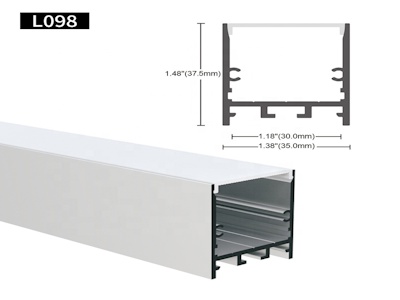
Алюминиевые профили широко применяются в строительстве, машиностроении и других отраслях благодаря своим уникальным свойствам, таким как легкость, прочность и устойчивость к коррозии. Однако, несмотря на популярность, этот материал далек от идеала и имеет ряд существенных недостатков, которые могут повлиять на выбор потребителей. В этой статье мы подробно рассмотрим 10 главных недостатков алюминиевых профилей, основываясь на экспертных мнениях, научных исследованиях и практическом опыте. Цель — предоставить объективную информацию, чтобы помочь вам сделать взвешенное решение при использовании этого материала.
Одним из наиболее значительных недостатков алюминиевых профилей является их высокая теплопроводность. Алюминий обладает коэффициентом теплопроводности около 237 Вт/(м·K), что значительно выше, чем у многих других строительных материалов, таких как дерево (0,1-0,2 Вт/(м·K)) или ПВХ (0,16 Вт/(м·K)). Это означает, что алюминиевые конструкции быстро проводят тепло, что может привести к повышенным теплопотерям зимой и перегреву летом. В холодном климате это увеличивает расходы на отопление, так как тепло уходит через профили, снижая энергоэффективность зданий. Для компенсации этого недостатка часто требуются дополнительные меры, такие как установка терморазрывов или использование изоляционных материалов, что удорожает проект. Например, в оконных рамах из алюминия без терморазрыва могут образовываться мостики холода, приводящие к конденсации влаги и плесени. Исследования показывают, что теплопотери через алюминиевые окна могут быть на 20-30% выше, чем через аналоги из ПВХ. Это делает алюминий менее предпочтительным для энергоэффективного строительства, особенно в регионах с экстремальными температурами.
Хотя алюминий известен своей устойчивостью к коррозии благодаря защитному оксидному слою, он не полностью иммунен к этому процессу. В агрессивных средах, таких как морское побережье с высоким содержанием солей, промышленные зоны с кислотами или щелочами, или области с высокой влажностью, алюминиевые профили могут подвергаться коррозии. Это проявляется в виде питтинга (точечной коррозии), которая ослабляет структуру материала и снижает его долговечность. Коррозия может привести к потере эстетического вида, появлению пятен и, в конечном итоге, к структурным повреждениям. Для защиты требуются дополнительные покрытия, такие как анодирование или порошковая покраска, что увеличивает стоимость и сложность производства. В истории известны случаи, например, в морской индустрии, где алюминиевые компоненты быстро выходили из строя из-за соленой воды. Регулярное обслуживание, такое как очистка и повторное покрытие, необходимо для продления срока службы, что добавляет эксплуатационные расходы.
Алюминиевые профили часто дороже, чем аналоги из других материалов, таких как ПВХ, сталь или дерево. Это связано с затратами на добычу бокситов, энергоемким процессом производства алюминия (электролиз) и сложностью обработки. Цена на алюминий колеблется в зависимости от рыночных условий, но в среднем она может быть на 30-50% выше, чем на ПВХ профили. Для крупных проектов, таких как строительство небоскребов или промышленных объектов, это может значительно увеличить общий бюджет. Кроме того, стоимость монтажа и дополнительных компонентов (например, терморазрывов) further adds to the expense. Хотя алюминий предлагает преимущества в весе и прочности, для бюджетных проектов он может быть неоправданно дорогим. Сравнительные анализы показывают, что использование стальных профилей в некоторых случаях обходится дешевле при аналогичной прочности, особенно когда вес не является критическим фактором.
Алюминий обладает хорошей прочностью на растяжение, но он более susceptible к повреждениям от ударов по сравнению с материалами like сталь. Его модуль упругости lower, meaning it can deform more easily under impact, leading to dents or bends. This is particularly problematic in applications where impact resistance is crucial, such as in automotive industries or safety barriers. For instance, in car frames, aluminum might not provide the same level of protection as high-strength steel in crash scenarios. Tests indicate that aluminum components can absorb less energy during impacts, increasing the risk of failure. In construction, this can manifest as damage during transportation or installation, requiring repairs or replacements. To mitigate this, alloys with higher strength are used, but они often come with trade-offs, such as reduced ductility or higher cost. This limitation makes aluminum less ideal for high-impact environments without additional reinforcement.
Монтаж алюминиевых профилей требует specialized skills and tools, which can be a drawback for DIY enthusiasts or small projects. Алюминий softer than steel, so it can be easily scratched or damaged during cutting, drilling, or shaping. This necessitates the use of precision equipment and experienced workers, increasing labor costs. Additionally, welding aluminum is more challenging due to its high thermal conductivity and tendency to oxidize, often requiring inert gas shielding (like TIG welding). Improper handling can lead to weak joints or defects. In contrast, materials like wood or PVC are easier to work with using basic tools. This complexity can delay projects and raise overall expenses. For example, in window installation, misaligned aluminum frames can cause operational issues, such as difficulty in opening or closing.
Производство алюминия is highly energy-intensive and has a significant environmental footprint. The process of extracting aluminum from bauxite ore involves the Bayer process and electrolysis, which consume large amounts of electricity—often derived from fossil fuels, leading to high greenhouse gas emissions. Studies show that producing one ton of aluminum can emit up to 10-15 tons of CO2 equivalent, compared to lower emissions for materials like wood or recycled steel. Mining bauxite also causes habitat destruction and pollution. While aluminum is recyclable and has a high recycling rate, the initial production phase remains environmentally damaging. This makes it less sustainable compared to greener alternatives, especially in an era focused on reducing carbon footprints. Consumers and regulators are increasingly favoring materials with lower embodied energy, which could limit the adoption of aluminum in eco-conscious projects.
Although aluminum is durable, its longevity can be compromised in extreme conditions. For example, in very high temperatures, aluminum can lose strength and become more prone to creep (deformation under load). In fire scenarios, aluminum melts at around 660°C, which is lower than the melting point of steel (约 1400°C), making it less fire-resistant. This can be a safety hazard in buildings or vehicles. Additionally, in cyclic loading environments, such as bridges or machinery, aluminum may suffer from fatigue failure over time. Research indicates that aluminum alloys have a finite fatigue life, requiring careful design and maintenance to prevent failures. In对比, materials like titanium or advanced composites offer better performance in harsh conditions but at a higher cost. This limitation restricts aluminum's use in critical applications where reliability is paramount.
Алюминиевые профили often require additional finishes to achieve desired aesthetics, as bare aluminum can look industrial or plain. Processes like painting, anodizing, or powder coating add cost and time to production. These finishes can also degrade over time due to UV exposure, weathering, or mechanical wear, leading to fading, chipping, or discoloration. For instance, anodized coatings may need reapplication after several years to maintain appearance. In comparison, materials like wood offer natural beauty with minimal processing, or composites can mimic various looks without as much upkeep. This aesthetic dependency means that aluminum might not be the best choice for projects where visual appeal is a priority without ongoing maintenance.
While aluminum is light, its strength-to-weight ratio has limits. For very large spans or heavy loads, aluminum profiles may need to be oversized or reinforced with other materials, negating the weight advantage. For example, in bridge construction, steel is often preferred for its higher strength in tension and compression. Aluminum's lower modulus of elasticity means it deflects more under load, which can be undesirable in precision applications. Size limitations in extrusion processes also restrict the dimensions of profiles, making it hard to produce very large single pieces without seams. This can lead to increased complexity in design and assembly, with more joints that are potential weak points. In aerospace, despite its use, aluminum is being replaced by composites for better performance, highlighting its limitations.
Алюминий is a good conductor of electricity, which can be a disadvantage in electronic or sensitive applications. It can cause electromagnetic interference (EMI) or act as a shield that disrupts signals, such as in通信 equipment or medical devices. This requires additional shielding or isolation measures, adding cost and complexity. In contrast, non-conductive materials like plastics are immune to such issues. For instance, in data centers, aluminum enclosures might interfere with server performance, necessitating special designs. This makes aluminum less suitable for modern tech-intensive environments without modifications.
В заключение, алюминиевые профили, безусловно, имеют свои merits, но эти 10 недостатков показывают, что они не универсальны. При выборе материала важно учитывать конкретные условия применения, бюджет и долгосрочные goals. Для более детальной консультации, обратитесь к специалистам в области строительства или материаловедения.
 1388xx888xx